

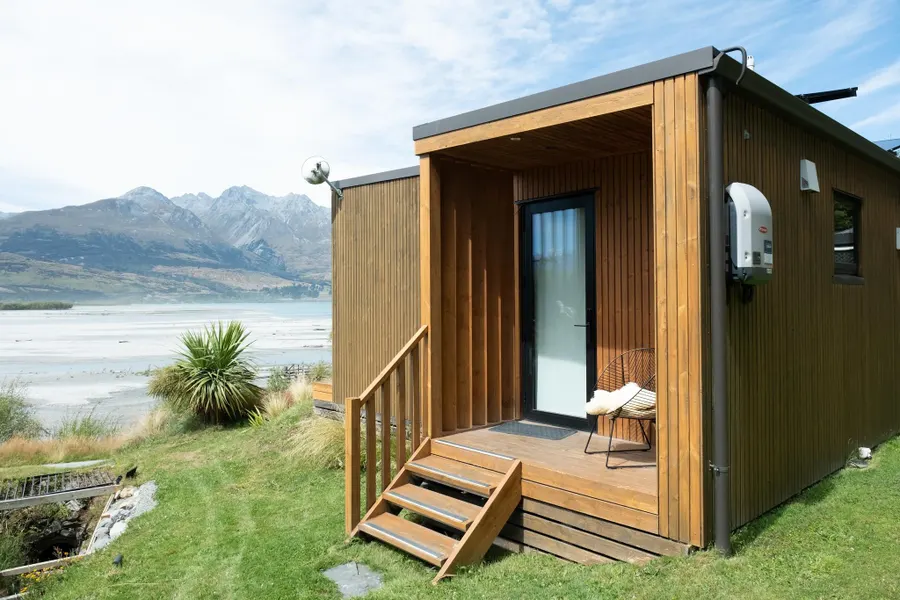
The New Frontier of Regenerative Hospitality: Queenstown’s Net-Positive Revolution
The global luxury hospitality sector is currently undergoing a seismic shift, transitioning from a model of passive sustainability to one of active regeneration. Nowhere is this transformation more evident than in Queenstown, New Zealand. Traditionally celebrated as the “Adventure Capital of the World,” this region is rapidly repositioning itself as a global leader in “net-positive” engineering. By integrating cutting-edge architectural technologies with high-profile investment and “star power,” two landmark properties are establishing a new blueprint for how the built environment can contribute more to the planet than it extracts. This evolution represents a departure from the “do less harm” philosophy of the past decade, moving instead toward a future where luxury developments act as restorative agents for their local ecosystems.
Net-positive engineering, the cornerstone of these new developments, refers to a holistic approach where buildings generate more energy than they consume, treat their own waste, and actively improve the biodiversity of their surroundings. In the context of Queenstown’s rugged alpine environment, this requires a sophisticated blend of traditional craftsmanship and modern innovation. The emergence of these properties signals a broader trend in the high-net-worth travel market: a demand for “guilt-free” luxury that aligns with the personal values of a more environmentally conscious global elite. This report examines the technical, experiential, and strategic components of this shift and its implications for the future of international tourism development.
The Technical Architecture of Net-Positive Engineering
The technical sophistication required to achieve net-positive status in a sub-alpine climate cannot be overstated. Unlike standard green buildings that focus on reducing electricity consumption through LED lighting or basic insulation, Queenstown’s leading eco-properties utilize integrated systems that function as a closed-loop ecosystem. At the heart of these developments are massive photovoltaic arrays and advanced battery storage systems designed to capture and retain solar energy during the region’s long summer days, providing a surplus that can often be fed back into the local grid. This energy independence is critical, ensuring that the properties remain operational and efficient even in the face of volatile climate patterns.
Furthermore, the engineering extends to advanced water management and waste-to-resource systems. These properties often employ sophisticated greywater recycling and on-site composting toilets that transform waste into nutrient-rich fertilizer for surrounding regenerative landscapes. By eliminating the need for traditional sewage infrastructure, these developments significantly reduce their pressure on municipal systems. The use of “Living Building” principles ensures that every material,from reclaimed timber to low-carbon concrete,is audited for its environmental footprint and toxicological impact. This rigorous attention to detail ensures that the structure itself is not merely a shelter, but a functioning participant in the local nitrogen and carbon cycles.
The Convergence of High-End Luxury and Environmental Stewardship
Historically, luxury and sustainability were often viewed as being at odds. The traditional hallmarks of five-star hospitality,excessive water use, imported gourmet goods, and high-energy climate control,are inherently resource-intensive. However, Queenstown’s new vanguard is proving that high-end aesthetics and environmental stewardship are mutually reinforcing. The “star power” associated with these properties,often driven by high-profile visionaries and international celebrities,has helped rebrand sustainability as the ultimate luxury. In this new paradigm, exclusivity is defined not by excess, but by the rarity of the experience and the purity of the environment.
Guests at these properties are offered an immersive experience that highlights the regenerative process. This includes “farm-to-table” culinary programs where the ingredients are grown on-site using the property’s recycled nutrients, and guided tours of the engineering systems that power their stay. This transparency creates a deeper emotional connection between the guest and the destination. By leveraging “star power” to draw attention to these initiatives, the properties are successfully marketing a new form of “conspicuous conservation.” This attracts a demographic that is willing to pay a premium for the assurance that their presence in a sensitive ecosystem is leaving it better than they found it, effectively turning the act of vacationing into an act of environmental philanthropy.
Strategic Implications and the Influence of High-Profile Capital
The involvement of high-profile investors and public figures in Queenstown’s sustainable development is a strategic catalyst for broader market change. “Star power” provides more than just marketing clout; it provides the significant capital required to absorb the high upfront costs of net-positive engineering. While these technologies offer substantial long-term savings in operational costs and energy bills, the initial investment is often 20% to 30% higher than traditional builds. By proving the commercial viability of these projects, these two flagship properties are de-risking the “net-positive” model for more conservative institutional investors.
This trend is also influencing local policy and regional planning. The success of these developments has encouraged local authorities in the Otago region to consider stricter environmental mandates for new builds, knowing that the luxury market can,and will,support such measures. As Queenstown aims for its goal of becoming a carbon-neutral destination, these properties serve as the operational proof-of-concept. They demonstrate that the transition to a low-carbon economy does not require a compromise in quality of life or economic vitality. Instead, it offers a competitive advantage in a global market where travelers are increasingly scrutinizing the environmental credentials of their destinations.
Concluding Analysis: The Future of the Regenerative Asset Class
The rise of net-positive properties in Queenstown represents a pivotal moment in the evolution of the global hospitality industry. It marks the transition of sustainability from a secondary “corporate social responsibility” (CSR) initiative to a primary driver of asset value and brand identity. From a business perspective, these developments are creating a new “regenerative asset class” that is highly resilient to future carbon taxes, rising energy costs, and shifting consumer preferences. The “star power” associated with these projects has been instrumental in shifting the cultural narrative, making eco-engineering a desirable feature rather than a technical necessity.
Looking forward, the success of these two properties will likely trigger a “race to the top” among luxury developers globally. As the data from these Queenstown projects becomes available, showing the operational efficiencies and high occupancy rates driven by their unique value proposition, we can expect to see similar models replicated in other sensitive environments, from the Swiss Alps to the coastlines of the Mediterranean. Ultimately, the lesson from Queenstown is clear: the future of luxury lies in the intelligent integration of technology, nature, and influence to create spaces that do more than just exist,they heal. For the modern investor and traveler alike, the greatest luxury is now the preservation of the world itself.