

Beyond the Handheld: MWC 2026 Signals a New Era of Integrated Technology
The Mobile World Congress (MWC) in Barcelona has long been the barometer for the telecommunications industry, but the 2026 iteration has signaled a profound transformation. No longer confined to the iterative updates of smartphones, this year’s exhibition served as the definitive stage for the “Everything-Connected” era. As the boundaries between digital connectivity and physical reality blur, the floor of the Fira Gran Via was dominated by three distinct pillars of innovation: high-performance automotive tech, sustainable modular hardware, and the long-awaited arrival of sophisticated humanoid robotics.
Industry analysts and venture capitalists present at the event noted a distinct shift in capital allocation. The focus has moved from mere software applications to “embodied AI”—technology that interacts directly with the physical world. This transition represents a maturation of the tech sector, moving away from a screen-centric existence toward a more immersive, utilitarian future.
The Software-Defined Vehicle: Mobility as a Platform
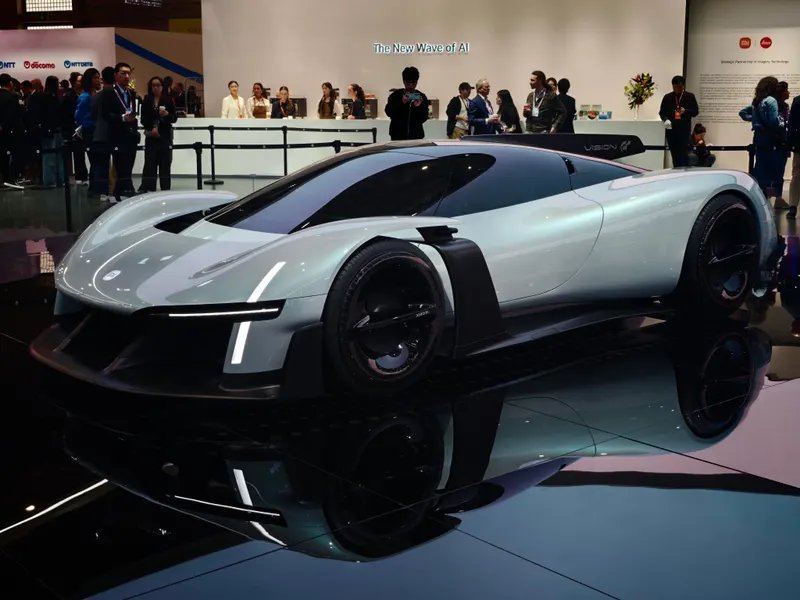
The centerpiece of the event was undoubtedly the debut of a cutting-edge hypercar concept that redefined the “connected vehicle.” Unlike previous years, where cars were treated as peripherals, the 2026 hypercar is a primary computing hub. Leveraging 6G-ready infrastructure and edge computing, the vehicle functions as a mobile data center. This concept emphasizes that the future of the automotive industry lies not in traditional mechanics, but in “software-defined mobility.”
For investors, this signals a major disruption for legacy automakers. The hypercar displayed at MWC showcased an integrated ecosystem where the vehicle’s operating system manages everything from autonomous navigation to real-time financial transactions, effectively making the car a high-speed, mobile office and entertainment suite.
A Circular Economy: The Rise of Modular Hardware
Sustainability moved from a corporate social responsibility (CSR) talking point to a core product strategy with the introduction of the latest modular phone concept. In response to increasing global regulatory pressure and a growing consumer backlash against planned obsolescence, this modular device allows for the seamless replacement of processors, camera modules, and batteries.
This move towards modularity represents a strategic pivot for hardware manufacturers. By decoupling the hardware lifecycle from the upgrade cycle, companies are exploring “Hardware-as-a-Service” (HaaS) models. This ensures long-term customer loyalty and significantly reduces e-waste, aligning business objectives with the global ESG (Environmental, Social, and Governance) mandates that are now dictating market valuations.
Physical AI: The Humanoid Robot Emerges
Perhaps the most provocative display at MWC 2026 was the functional humanoid robot, a device that moved beyond the “uncanny valley” to demonstrate practical utility. Powered by advanced Large Action Models (LAMs), these robots are designed to bridge the gap between digital intelligence and physical labor. Attendees witnessed demonstrations ranging from complex warehouse logistics to nuanced personal assistance.
The business implications for humanoid robotics are staggering. As labor shortages persist in developed economies, the commercialization of reliable humanoid units offers a scalable solution for logistics, healthcare, and retail sectors. The technology shown at MWC suggests that the infrastructure for a robotic workforce is finally moving out of the lab and onto the balance sheet.
Concluding Analysis: The Strategic Pivot
The takeaways from MWC 2026 are clear: we are entering an age of technological convergence. The hypercar, the modular phone, and the humanoid robot are not disparate gadgets; they are interconnected nodes in a singular, intelligent ecosystem. For the first time, we are seeing the “Mobile” in Mobile World Congress apply to the mobility of data across every facet of human existence.
From a business perspective, the winners of the next decade will not be those who build the best standalone devices, but those who control the platforms that connect them. As 6G looms on the horizon and AI moves from our screens into our streets and homes, the investment landscape is shifting toward companies that can master the integration of hardware, software, and physical automation. MWC 2026 was not just a trade show; it was a manifesto for the next industrial revolution.