


The Economics of Attrition: Why Defense and Energy Sectors Thrive in Protracted Global Conflict
By Senior Financial Correspondent | Analysis
As geopolitical fault lines deepen across Eastern Europe and the Middle East, the global economic narrative is shifting from a focus on post-pandemic recovery to the sobering realities of a “war economy.” While prolonged kinetic conflicts historically exert inflationary pressure and strain international supply chains, they simultaneously create a massive windfall for two specific pillars of the industrial complex: Defense and Energy. For institutional investors and sovereign wealth funds, these sectors are increasingly viewed not just as hedges against volatility, but as the primary beneficiaries of a world defined by strategic attrition.
1. The Military-Industrial Complex: Beyond Replenishment
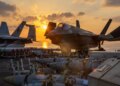
A lengthy conflict fundamentally alters the procurement cycles of national governments. In the initial stages of a crisis, defense spending is often reactionary, focusing on the immediate transfer of existing stockpiles. However, as a conflict enters a protracted phase, the focus shifts to “industrial capacity expansion.” This is where major defense contractors,the likes of Lockheed Martin, Raytheon (RTX), and BAE Systems,see exponential growth in their multi-year backlogs.
Modern warfare in the 21st century is a high-burn environment for precision-guided munitions, unmanned aerial systems (UAS), and sophisticated missile defense arrays. A lengthy conflict forces a paradigm shift from “just-in-time” inventory to “just-in-case” mass production. This necessitates massive state subsidies for factory retooling and long-term service contracts that guarantee revenue streams for decades. Furthermore, the “lesson-learned” effect prompts neutral or non-belligerent nations to modernize their own fleets, creating a global contagion of defense spending that persists long after the initial guns fall silent.
2. Energy Security and the Geopolitical Risk Premium
In the energy sector, conflict serves as a catalyst for a radical re-routing of global trade. The weaponization of energy exports and the disruption of maritime chokepoints introduce a “geopolitical risk premium” that keeps floor prices for Brent crude and natural gas elevated. For traditional oil majors and Liquefied Natural Gas (LNG) exporters, a lengthy conflict provides the price stability required to greenlight multi-billion dollar CAPEX projects that might have seemed too risky in a more stable, lower-priced environment.
Moreover, protracted instability accelerates the quest for “energy sovereignty.” While this eventually bolsters renewable transitions, the immediate beneficiary is the domestic fossil fuel infrastructure. European nations, for instance, have been forced to pivot away from pipeline dependency toward expensive sea-borne LNG infrastructure. This transition represents a massive transfer of wealth to energy providers who can offer security of supply, effectively turning energy from a commodity into a strategic strategic asset with premium pricing power.
3. The Capital Shift: Defense as the New ‘ESG’ Alternative
The financial markets are witnessing a significant recalibration of capital. For years, the Environmental, Social, and Governance (ESG) movement marginalized defense stocks, often categorizing them alongside “sin stocks” like tobacco or gambling. However, the reality of a lengthy conflict has prompted a re-evaluation of what constitutes a “socially responsible” investment. Many analysts now argue that national security is a prerequisite for any sustainable society, leading to a surge in institutional capital flowing back into the defense sector.
This shift is compounded by the defensive nature of these stocks in a high-interest-rate environment. Defense and energy companies often boast strong balance sheets, consistent dividends, and,most importantly,government-backed contracts that are largely immune to consumer spending slumps. In a period of prolonged global instability, the market favors “hard assets” and “secured earnings,” positioning these two sectors as the inevitable winners of a fractured global order.
Concluding Analysis
From a cold, analytical perspective, the prolongation of conflict acts as a powerful, albeit tragic, economic stimulus for specific industrial niches. While the broader global economy suffers from increased debt loads and inflationary headwinds, the defense and energy sectors find themselves in a unique “super-cycle.” The convergence of military modernization and energy infrastructure overhaul represents a multi-trillion dollar shift in global GDP. For the senior business observer, the takeaway is clear: we are entering an era where geopolitical volatility is no longer a temporary market disruption, but a permanent feature of the industrial landscape, favoring those who provide the tools of protection and the fuel of survival.