

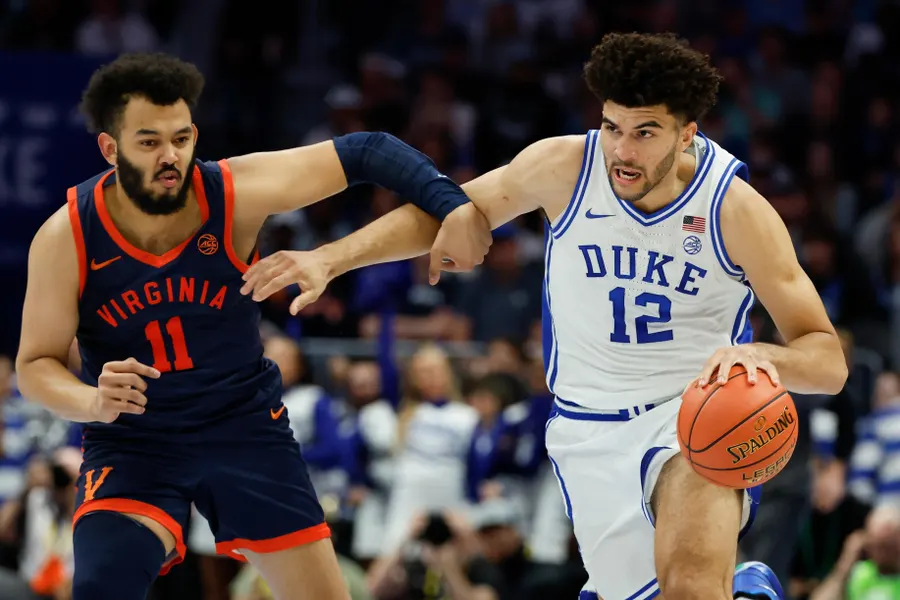

The Economics of Elite Talent: Evaluating the Impact of High-Profile Freshmen on the Collegiate Post-Season
The commencement of the NCAA men’s basketball tournament marks more than a seasonal transition in collegiate athletics; it represents the annual zenith of a multi-billion dollar industry where brand equity, broadcast revenue, and professional scouting converge. This year, the narrative is dominated by a select group of freshmen whose entry into the tournament is viewed not merely as a developmental milestone, but as a critical injection of value into the collegiate ecosystem. High-profile prospects such as Duke’s Cameron Boozer and BYU’s AJ Dybantsa enter the fray carrying the expectations of their respective institutions and the broader market of Name, Image, and Likeness (NIL) stakeholders.
For decades, the NCAA tournament has served as a primary audition stage for the NBA, yet the modern era has introduced a sophisticated layer of commercial pressure. The participation of “blue-chip” freshmen is a prerequisite for high television ratings and social media engagement, which in turn fuels the valuation of media rights deals. As these athletes take the court, the focus extends beyond the box score to the fiscal and strategic ramifications of their performance on a national stage.
The Commercial Magnetism of Blue-Chip Prospects
The arrival of Cameron Boozer at Duke University and AJ Dybantsa at BYU signals a shift in the distribution of elite athletic capital. In the current collegiate landscape, these players are essentially independent contractors operating within a university framework. Boozer, carrying a legacy name and a versatile skill set, reinforces Duke’s position as a premium athletic brand. The financial implications for the university are substantial; elite freshmen drive ticket sales, alumni donations, and merchandising revenue. From a business perspective, Boozer is a high-yield asset that mitigates the risk of early-round exits by maintaining national relevance through individual stardom.
Conversely, Dybantsa’s presence at BYU highlights a different strategic maneuver. Historically, BYU has not been a primary destination for the nation’s top-ranked overall recruits. His recruitment indicates a successful deployment of NIL resources and a strategic pivot in the program’s competitive philosophy. For BYU, Dybantsa is more than a scorer; he is a proof-of-concept for the university’s ability to compete in the open market for elite talent. The “Dybantsa Effect” provides the program with a level of visibility that attracts secondary and tertiary talent, effectively raising the floor of the program’s long-term valuation.
Strategic Recruitment and the Evolution of NIL Economics
The integration of Boozer and Dybantsa into their respective rotations underscores the evolving “arms race” in collegiate recruiting. We are currently witnessing a professionalization of the recruitment process, where the Return on Investment (ROI) is calculated by coaching staffs and boosters with surgical precision. The recruitment of such high-caliber freshmen is no longer solely about winning a championship; it is about securing a seat at the table of elite institutional visibility.
The “One-and-Done” phenomenon has evolved. In previous cycles, the goal was simply to acquire talent. Today, the goal is to manage a portfolio. Duke’s acquisition of Boozer represents a low-variance investment in a proven lineage, ensuring internal stability. In contrast, BYU’s acquisition of Dybantsa is a high-growth play designed to disrupt the status quo. These differing strategies reflect a broader trend in the NCAA: programs are now acting like venture capital firms, placing significant “bets” on freshmen who can provide an immediate impact before declaring for the professional ranks. The tournament serves as the liquidity event for these investments, where a deep run can exponentially increase the brand value of both the player and the school.
Competitive Equilibrium and Tournament Volatility
While the business metrics of these freshmen are impressive, their impact on the court introduces a unique set of variables into the tournament’s competitive equilibrium. Freshman-heavy rosters often face criticisms regarding lack of experience and “tournament toughness.” However, the sheer physical maturity and skill level of players like Boozer and Dybantsa challenge this traditional wisdom. Their ability to bridge the gap between collegiate fundamentals and professional-grade athleticism allows their teams to bypass traditional developmental timelines.
In the high-stakes environment of a single-elimination tournament, these elite freshmen act as “force multipliers.” They provide coaches with tactical options that opponents,often consisting of older, less athletic “system” players,cannot easily neutralize. The challenge for Duke and BYU lies in the rapid integration of these individual stars into a cohesive unit. The tournament often exposes the friction between individual NBA aspirations and collective collegiate goals. From a management perspective, the coaching staffs must balance the high-usage requirements of these star prospects with the necessity of team-wide buy-in to survive the opening weekend.
Concluding Analysis: The Future of the Collegiate Professional Model
As the tournament progresses, the performances of Cameron Boozer and AJ Dybantsa will likely be the primary metrics by which the success of this season is judged. Beyond the wins and losses, their presence validates the current direction of collegiate athletics: a model that is increasingly indistinguishable from professional sports in terms of talent acquisition and market capitalization. The ability of these freshmen to perform under the intense scrutiny of a national audience will determine the future trajectory of NIL valuations and the willingness of boosters to continue funding high-end recruiting classes.
Ultimately, the impact of these players transcends the scoreboard. They are the faces of a new era where the “student-athlete” designation is secondary to their roles as high-value brand ambassadors. If Boozer and Dybantsa lead their teams to the later stages of the tournament, it will further solidify the strategy that elite, individual talent is the most reliable path to institutional growth in the modern era. The business of March Madness has never been more dependent on the performance of its youngest stars, and this year’s tournament stands as a definitive case study in the power of elite recruitment.