

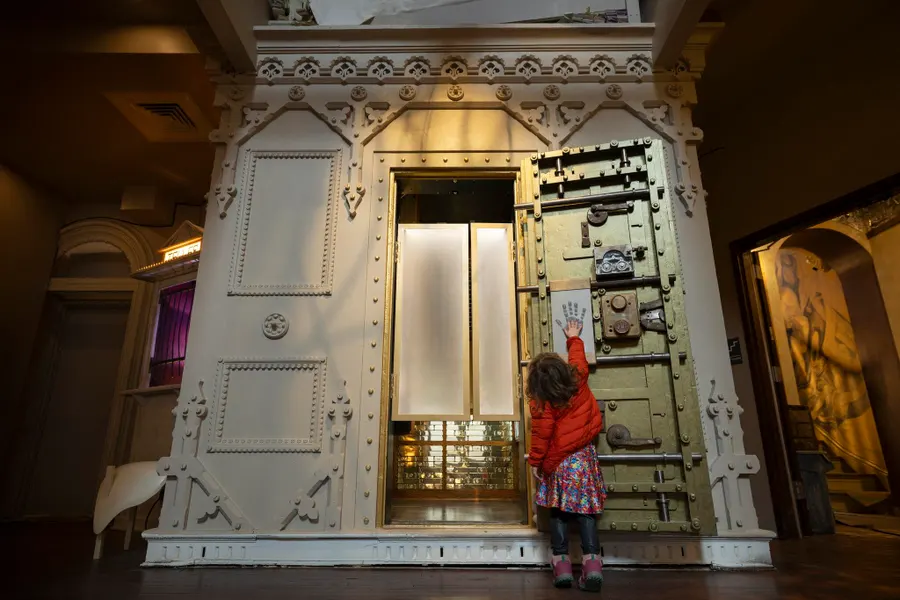
The Ministry of Awe: A Strategic Landmark in Philadelphia’s Experiential Economy
The landscape of urban entertainment and cultural infrastructure is undergoing a significant transformation, driven by a shift in consumer preference from passive observation to active participation. At the forefront of this evolution is the forthcoming launch of The Ministry of Awe, a premier immersive experience slated to open its doors to the public on March 14, 2026. Situated at 27 N. 3rd Street in the historic Old City district of Philadelphia, this venture represents a sophisticated convergence of art, technology, and real estate development. As the experiential economy continues to outperform traditional retail sectors, the arrival of such a high-capital, high-concept attraction signals a new era for Philadelphia’s commercial and cultural identity.
The Ministry of Awe enters the market during a period of intense competition for consumer “share of mind.” By leveraging large-scale installation art and cutting-edge sensory technology, the project aims to establish a permanent anchor in a neighborhood already synonymous with American history and creative innovation. This report examines the strategic implications of the opening, focusing on its role in urban revitalization, the economic drivers of the immersive sector, and the long-term operational impact on the regional hospitality ecosystem.
Strategic Location and Urban Revitalization in Old City
The selection of 27 N. 3rd Street is a calculated move that capitalizes on Old City’s unique demographic profile and high foot traffic. Historically known as the “Birthplace of American Liberty,” Old City has successfully transitioned into a hub for contemporary art galleries, boutique retail, and high-end residential lofts. The Ministry of Awe acts as a modern bridge between these two identities. From a real estate perspective, the adaptive reuse of space for large-scale immersive installations provides a solution to the challenges facing traditional brick-and-mortar commercial holdings. By creating a “destination” venue, the developers are ensuring a consistent flow of visitors that benefits surrounding hospitality and service-oriented businesses.
Furthermore, the 2026 opening coincides with a broader regional push to prepare Philadelphia for significant national milestones. The influx of tourists expected for the United States’ semiquincentennial celebrations necessitates a diverse portfolio of attractions that can accommodate high volumes of visitors while providing a premium experience. The Ministry of Awe is positioned to capture this surge, serving as a critical piece of the city’s tourism infrastructure. Its presence is expected to catalyze further investment in the North 3rd Street corridor, driving up property values and encouraging a secondary wave of creative-class businesses to relocate to the area.
The Economic Calculus of Immersive Entertainment
The business model underpinning The Ministry of Awe reflects a global trend toward “experiential retail.” Market data indicates that Millennial and Gen Z consumers prioritize spending on unique, “Instagrammable” experiences over material goods. However, the viability of such projects depends on more than mere aesthetics; it requires a robust technological backbone and a scalable operational framework. The Ministry of Awe represents a significant capital expenditure (CAPEX) investment, likely involving sophisticated projection mapping, spatial audio systems, and interactive haptic interfaces. These elements create a high barrier to entry, protecting the venture from smaller-scale competitors.
Revenue streams for the venue are expected to be multifaceted. Beyond primary ticket sales, the business model likely incorporates high-margin ancillary revenue such as exclusive corporate event hosting, limited-edition merchandise, and tiered membership programs. In an era where digital fatigue is a growing consumer concern, “The Ministry” offers a physical space that utilizes digital tools to facilitate human connection and wonder. This “phygital” approach is essential for long-term sustainability, allowing the venue to refresh its content and installations via software updates and rotating artist residencies without requiring a total physical overhaul of the premises.
Operational Scaling and Stakeholder Impact
The launch of a major cultural institution requires a complex orchestration of stakeholders, including local government, neighborhood associations, and the creative community. For Philadelphia, The Ministry of Awe serves as a major employer in the burgeoning “creative-tech” sector. The facility will require a diverse workforce, ranging from high-level software engineers and creative directors to hospitality staff and security personnel. By fostering partnerships with local artists and technical schools, the venue can position itself as an incubator for regional talent, ensuring that the economic benefits of the project are shared within the community.
Operational excellence will be the determining factor in the venue’s longevity. Managing the throughput of guests while maintaining the “awe” promised by its name requires sophisticated crowd-management logistics and a focus on the customer journey. Successful immersive venues elsewhere have shown that the secondary impact on the local “night-time economy”—including bars, restaurants, and hotels,can be substantial. As a permanent installation rather than a pop-up, The Ministry of Awe must maintain a high level of operational integrity to ensure repeat visitation and positive word-of-mouth in an increasingly critical digital review environment.
Concluding Analysis: The Future of Cultural Infrastructure
The opening of The Ministry of Awe on March 14, 2026, is more than a local event; it is a case study in the resilience of urban centers. By integrating high-concept art with a commercially viable business framework, the project demonstrates how cities can reinvent themselves in the post-pandemic landscape. Philadelphia’s investment in this sector suggests a strategic pivot toward becoming a national leader in the experience economy. As the lines between entertainment, education, and art continue to blur, institutions like The Ministry of Awe will become the new “cathedrals” of the modern city,driving economic growth, fostering social cohesion, and providing the visceral, shared experiences that digital platforms cannot replicate.
Ultimately, the success of this venture will be measured by its ability to balance artistic integrity with commercial necessity. If executed correctly, The Ministry of Awe will not only redefine the 3rd Street corridor but will also set a benchmark for how immersive technology can be harnessed to revitalize historic urban environments. For investors, city planners, and the public alike, March 2026 represents a pivotal moment in Philadelphia’s ongoing cultural and economic renaissance.