

The Renaissance of Greek Hospitality: Maza and the Strategic Evolution of Experiential Dining
The global hospitality landscape is currently undergoing a seismic shift, moving away from the sterile minimalism that defined the early 2010s toward a more textured, narratively driven approach to service and atmosphere. At the forefront of this movement is a sophisticated reinterpretation of cultural heritage, a trend exemplified by the emergence of Maza. Inspired by the vibrant, communal spirit of 1980s Athenian tavernas, Maza represents more than a mere culinary venture; it is a calculated strategic entry into the high-end experiential market. By leveraging the psychological power of nostalgia and combining it with modern operational excellence, Maza signals a significant new chapter in the international Greek dining sector.
In the current economic climate, where consumer discretionary spending is increasingly directed toward unique experiences rather than material goods, the hospitality industry must offer a compelling value proposition that transcends the plate. Maza’s foundational concept,rooted in the specific cultural “Golden Age” of late-20th-century Athens,targets a sophisticated demographic that values authenticity, history, and social connectivity. This report examines the three primary pillars that define Maza’s market position: the strategic reimagining of heritage, the operational integration of traditional and modern service models, and the broader economic implications for the Greek culinary export.
The Strategic Reimagining of Cultural Heritage
The success of Maza hinges on its ability to distill the essence of the 1980s Athenian taverna,a period characterized by burgeoning middle-class prosperity and a raw, energetic social scene,into a polished, contemporary brand. This is not a simple exercise in retro-theming; it is a sophisticated cultural pivot. From a brand-positioning perspective, nostalgia serves as a powerful tool for emotional engagement. By invoking the atmosphere of a bygone era, Maza establishes an immediate sense of familiarity and trust with its audience.
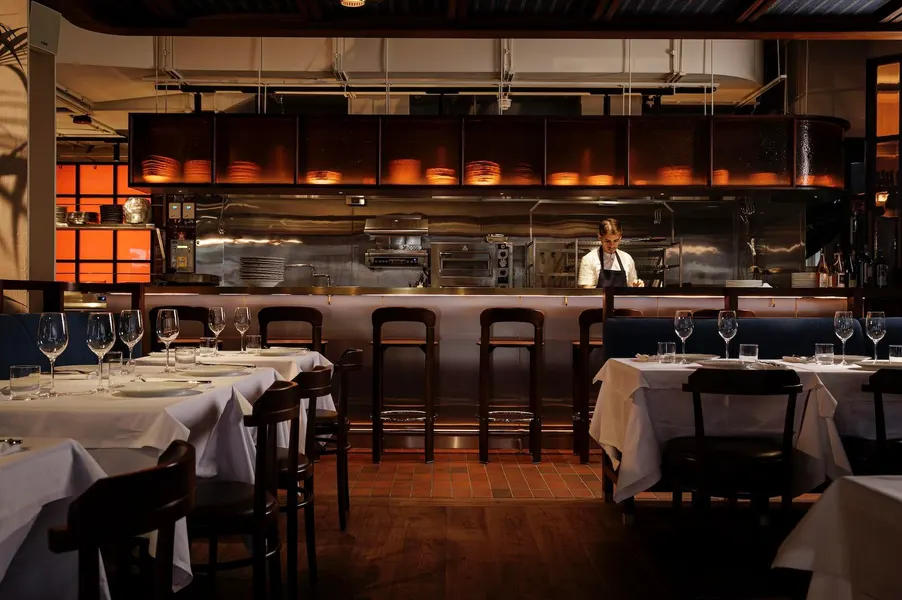
Expertly curated design elements play a critical role in this reimagining. The aesthetic does not merely mimic the past but elevates it. Where the original tavernas of the eighties may have been characterized by unpretentious decor and communal proximity, Maza translates these traits into high-end finishes, atmospheric lighting, and a floor plan designed to foster “orchestrated spontaneity.” This approach allows the brand to capture the soul of the original experience while meeting the exacting standards of the modern luxury diner. The result is a venue that feels both historically grounded and forward-looking, satisfying the consumer’s desire for a “story” behind their meal.
Operational Integration: Balancing Tradition and Efficiency
From an operational standpoint, Maza faces the complex challenge of delivering an “authentic” taverna experience,which often implies a degree of casualness and warmth,while maintaining the rigorous standards of a premier hospitality establishment. This requires a delicate balance of service training and back-of-house logistics. The “meze” style of dining, which is central to the Maza concept, demands a high level of synchronization between the kitchen and the service staff. Small plates must arrive in a specific cadence to maintain the momentum of the meal, a process that requires sophisticated table management systems and a highly trained culinary team.
Furthermore, the sourcing strategy for Maza reflects a commitment to culinary integrity that is essential for long-term brand equity. In an era where “farm-to-table” has become a baseline expectation, Maza distinguishes itself through the direct importation of specific Greek ingredients that are evocative of the 1980s palate but refined for modern tastes. This focus on product provenance not only enhances the quality of the offering but also builds a narrative of exclusivity and expertise. By controlling the supply chain and focusing on artisanal producers, Maza creates a barrier to entry for competitors who may attempt to replicate its aesthetic without the same depth of substance.
Market Positioning and the Global Greek Culinary Export
The launch of Maza occurs at a time when Greek cuisine is being successfully repositioned on the global stage. Historically pigeonholed as a budget-friendly, casual option, Greek dining has recently ascended into the fine-dining and “premium-casual” tiers in major markets like London, New York, and Dubai. Maza is a prime example of this “New Greek” movement, which emphasizes the sophistication of Hellenic flavors and the elegance of Mediterranean hospitality. By focusing on the 1980s Athenian taverna, Maza carves out a unique niche within this broader trend, moving away from the blue-and-white “island” tropes toward a more urban, sophisticated, and energetic identity.
This strategic positioning allows Maza to tap into several high-growth consumer segments, including the “cultural traveler” and the “heritage-conscious professional.” These consumers are less interested in generic luxury and more interested in brands that offer a sense of place and time. Consequently, Maza is well-positioned for scalability. The model,high-energy atmosphere combined with premium food and beverage margins,is highly attractive to investors seeking hospitality assets with strong brand identity and loyal customer bases.
Concluding Analysis: The Future of Nostalgia-Driven Hospitality
In conclusion, Maza represents a masterful integration of cultural narrative and commercial viability. By looking backward to the Athenian 1980s, the brand has found a way to move forward in a competitive and often derivative industry. The “significant new chapter” described by the brand is reflective of a wider shift toward “soulful hospitality”—an approach that prioritizes emotional resonance as much as operational efficiency.
The sustainability of this model will depend on Maza’s ability to remain authentic to its roots while evolving with changing consumer preferences. As the novelty of the 1980s aesthetic eventually matures, the brand’s long-term success will be anchored in its commitment to quality and its ability to foster a genuine sense of community. For the hospitality industry at large, Maza serves as a compelling case study in how to leverage heritage to create a modern, resilient, and highly desirable brand. It proves that in the quest for innovation, the most potent inspiration can often be found in the lived experiences of the past.