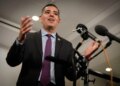

The Architect of Health Economics: Anthony T. Lo Sasso’s Influence on Public Policy
Anthony T. Lo Sasso, Professor of Public Affairs at the University of Wisconsin-Madison, provides critical insights into the intersection of healthcare and market dynamics.
In the increasingly complex theater of American fiscal policy, few voices command as much empirical respect as Anthony T. Lo Sasso. As a Professor of Public Affairs at the University of Wisconsin-Madison’s La Follette School of Public Affairs, Lo Sasso occupies a pivotal role at the intersection of healthcare economics and legislative strategy. With the United States grappling with skyrocketing medical costs and a fluctuating labor market, his data-driven approach offers a necessary corrective to the often-polarized rhetoric surrounding public health mandates and insurance market stability.
The Microeconomics of Health Insurance Markets
Professor Lo Sasso’s research is defined by a rigorous examination of how individual and corporate behaviors shift in response to regulatory changes. His work often delves into the intricacies of the Affordable Care Act (ACA), specifically analyzing how market competition,or the lack thereof,influences premium pricing and consumer choice. Unlike pundits who view healthcare through a purely ideological lens, Lo Sasso utilizes econometric models to determine whether government interventions are achieving their intended outcomes or inadvertently creating market distortions.
His scholarly contributions extend into the nuances of employer-sponsored insurance, a cornerstone of the American economy. By investigating the elasticity of demand for health coverage among various demographic groups, Lo Sasso provides businesses and policymakers with the tools to predict how fiscal shifts might impact labor mobility and workforce productivity.
Bridging Academia and the Legislative Scaffolding
Beyond the lecture halls of UW-Madison, Lo Sasso acts as a bridge between high-level academic theory and the practical realities of governance. His expertise is frequently sought after to interpret the cascading effects of policy shifts on public programs like Medicare and Medicaid. In an era where “evidence-based policy” is often touted but rarely executed, Lo Sasso’s presence in the national discourse ensures that the fiscal consequences of social mandates are laid bare.
His tenure at UW-Madison has further solidified his reputation as a pragmatist. By mentoring the next generation of public affairs professionals, he is shaping a cadre of experts who prioritize solvency and efficiency alongside accessibility. This academic leadership is critical as the healthcare sector continues to represent a growing share of the national GDP, requiring more sophisticated management than ever before.
Market Dynamics and the Future of Consumer Choice
One of the most pressing themes in Lo Sasso’s recent discourse involves the tension between regulatory oversight and the preservation of competitive markets. He has consistently pointed toward the importance of transparency in medical pricing and the role of high-deductible health plans in encouraging consumer responsibility. By analyzing how different insurance structures affect the utilization of healthcare services, his research highlights the delicate balance required to maintain a sustainable safety net without stifling innovation.
Concluding Analysis: The Lo Sasso Metric
The business of healthcare is no longer just a sector of the economy; it is the primary driver of national fiscal health. Anthony T. Lo Sasso represents a vital link in the chain of accountability. His work suggests that the future of American healthcare will not be decided by grand ideological victories, but by the granular optimization of insurance markets and the careful calibration of public-private partnerships.
As we look toward upcoming legislative cycles, Lo Sasso’s findings on market competition will likely serve as a benchmark for evaluating new proposals. His authoritative voice reminds us that in the realm of public affairs, the most compassionate policy is often the one that is most economically sound. For investors, healthcare providers, and the tax-paying public, Lo Sasso remains a sentinel of empirical truth in a sea of fiscal uncertainty.